I remember helping my dad milk cows when I was still too young to reach half the things in the barn without climbing. When a cow freshened, its milk would be thick, yellow, and warm from the udder. I could see it was different, but back then I didn’t stop long enough to think about just how remarkable it was.
Today, I see it with fresh eyes. Bovine colostrum is not ordinary milk. It is a mother’s first provision for her newborn calf, built for a short and important window of life. Around here, that makes it something we handle with care.
What is bovine colostrum?
Colostrum is the first milk produced after a cow gives birth. It is usually thicker and more golden than the milk that follows, and its job is straightforward: give the newborn the best possible start.
A calf is born needing energy, nourishment, and immune support right away. Research on dairy calves consistently shows that colostrum contains much higher concentrations of immunoglobulins than mature milk, along with protein, fat, growth factors, and other bioactive compounds. But on the farm, we do not need a lab report to know it matters. We can see the difference it makes for little calves.
The calf comes first
This is the part that ought to stay simple: the newborn gets what it needs before anything else is considered. A calf’s early colostrum intake is a major part of sound animal care, which is why timing, cleanliness, and good observation matter when a cow freshens.
We pay attention to the basics:
- Is the calf nursing well and getting a strong start?
- Is the cow comfortable and settled after calving?
- Is there truly more than the calf needs?
- Can any extra be collected and frozen promptly?
That last point matters. Bovine colostrum is not an endless commodity. It is made only during the first days after calving, and every animal is different. Real food does not always arrive on a production schedule, and honestly, I think that is worth respecting.
Why the color and texture are different
People often notice the golden color first. That color comes in part from naturally occurring pigments such as carotenoids, while the thicker feel reflects its richer mix of solids compared with mature milk.
The milk’s composition changes quickly after birth. What starts as true colostrum transitions toward regular milk over the next several milkings. That short window is exactly why farmers have long treated it as valuable.
Careful handling is part of the value
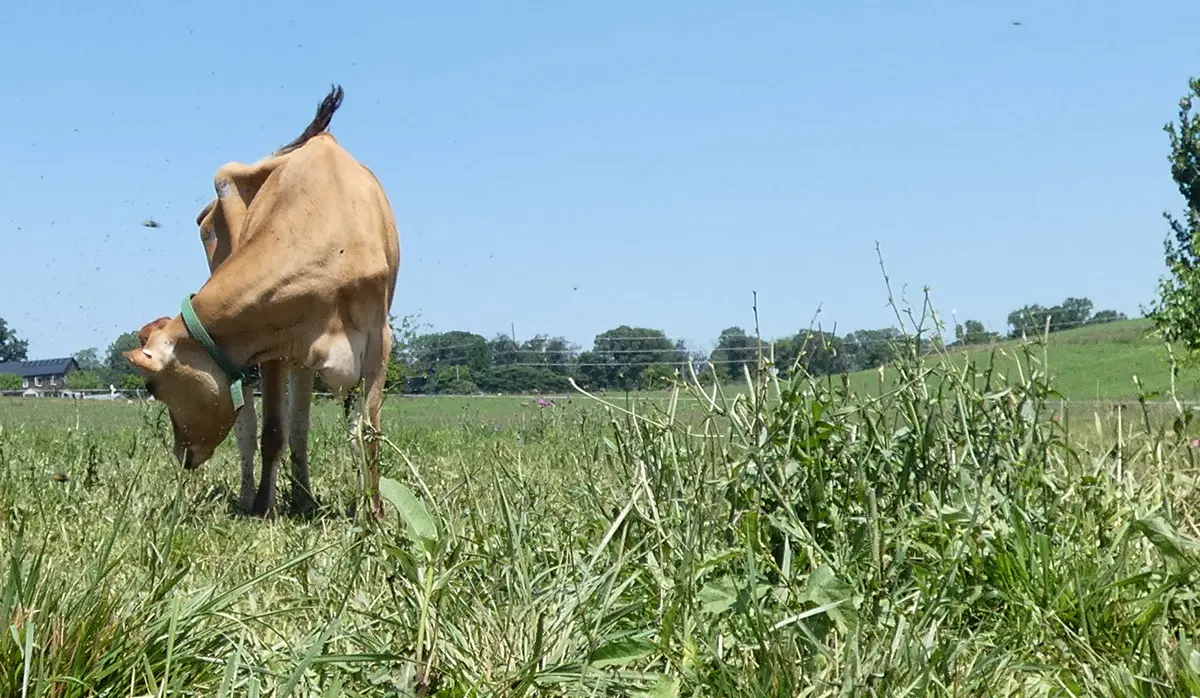
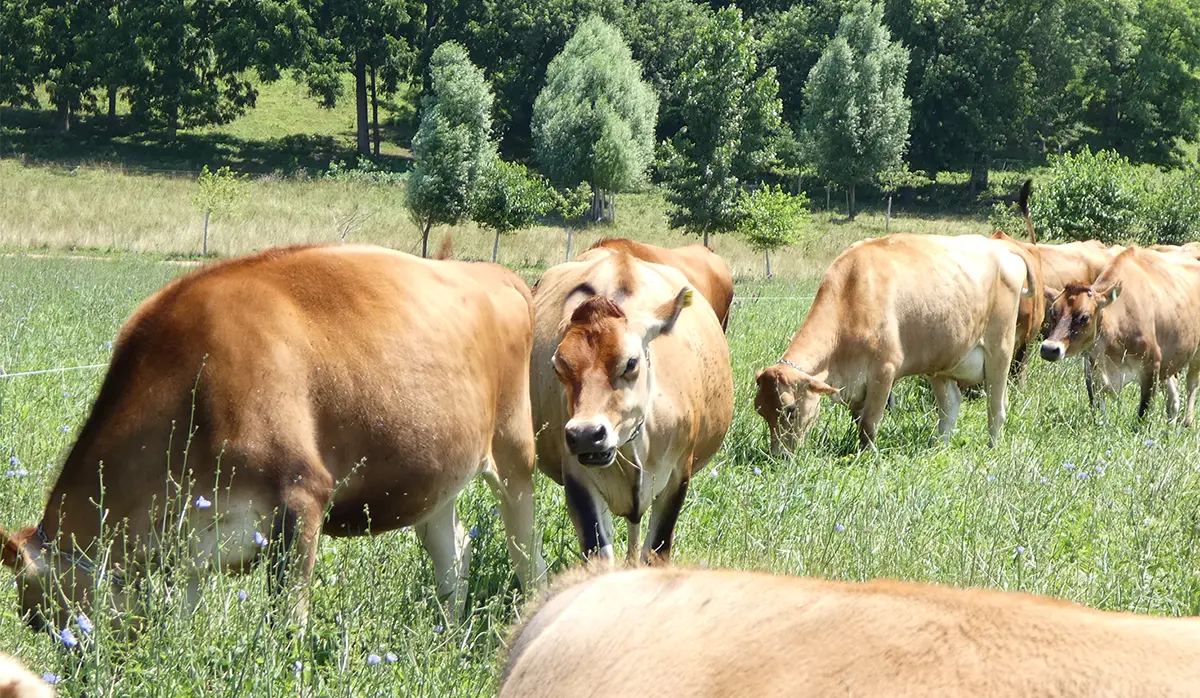
At Noble Pastures, we raise our cows on pasture and grass and hay, without grain feeding. We believe the way animals live matters, and that good food starts long before milking time—with clean pasture, attentive care, and respect for the natural rhythm of the herd.
When there is colostrum beyond what a calf needs, we collect it carefully and freeze it to hold it in that fresh state. It’s not that we think it’s a magic potion or miracle cure for all illnesses. Rather, we see it as a rare and very nutritious farm food, and it deserves to be handled honestly.
A little more respect for first foods
Modern food has trained us to expect everything all the time. But nature does not work that way. There is a season for grass, a season for calves, and a brief season for colostrum.
That is why bovine colostrum still gets called liquid gold by farmers like us. It is purposeful, limited, and made for the beginning of life. If you want to learn more about the way we care for our animals and produce food from pasture to plate, take a look around Noble Pastures. We are proud to share food raised with that kind of care.