When people ask how grazing cattle helps the environment, I understand why they are curious. Cattle have gotten plenty of attention in environmental conversations, and not all grazing is good grazing. But livestock managed well on living pasture can be part of restoring the land instead of simply taking from it.
At Noble Pastures, we raise animals outdoors on pasture, where they can graze fresh forage and live the way livestock were designed to live. Our job is not to force more out of the land every year. It is to pay attention, move animals with purpose, and leave the pasture better able to grow tomorrow.
Grazing can build soil instead of wearing it out
Grass is doing much more than feeding cattle. Through photosynthesis, a growing plant pulls carbon dioxide from the air and sends a portion of that carbon below ground through its roots. There, it can help feed soil microbes and contribute to soil organic matter.
That does not mean every pasture automatically stores carbon, and we should be honest about that. Results depend on soil type, weather, plant cover, and management. But research on managed grazing shows that limiting overgrazing, maintaining ground cover, and giving plants adequate recovery can support healthier soils, more root growth, and greater soil-carbon storage over time.
A pasture that is grazed hard and never allowed to recover loses its ability to do that work. A pasture that gets rest can put energy back into leaves and roots.
Rest is part of the work
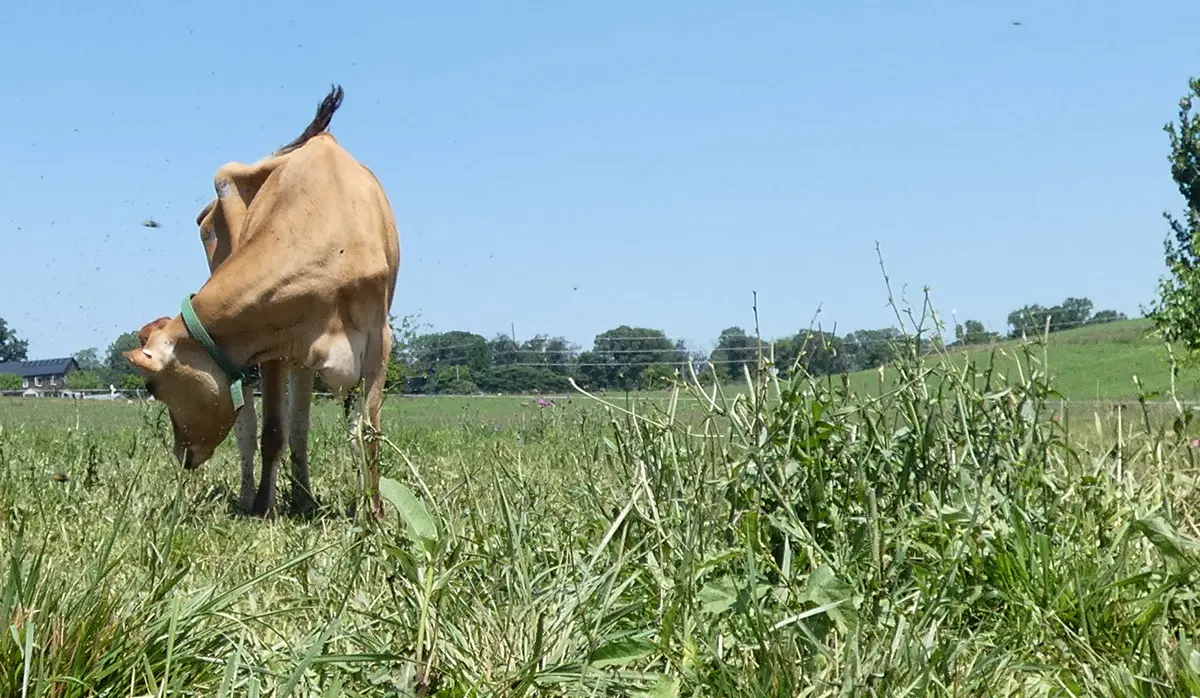
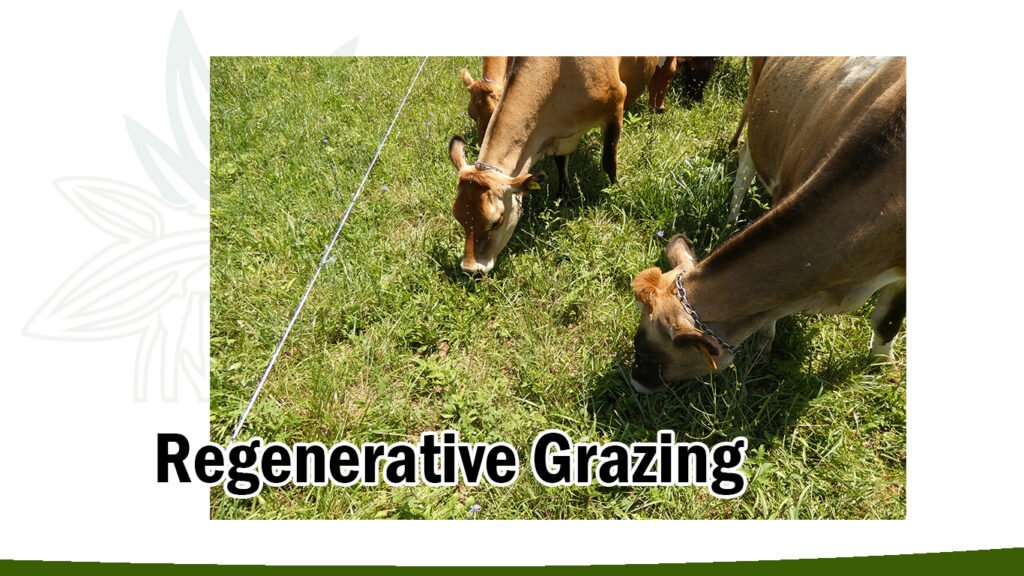
Regenerative grazing is not just turning cattle out and hoping for the best. It means watching the forage and moving animals so they do not keep coming back to bite a plant before it has recovered.
When cattle move through a pasture, they do several useful things:
- They harvest grass without tilling the soil.
- They return nutrients through manure and urine.
- Their hoof action can press plant material against the soil surface.
- They make room for fresh regrowth, then leave the field time to rest.
The recovery period matters as much as the grazing period. Healthy, actively growing pasture keeps the ground covered, which helps protect it from erosion, hot sun, and pounding rain. A covered soil is usually a cooler, more biologically active soil.
Better soil holds more water
One of the most practical answers to how grazing cattle helps the environment is water. Soil with good structure and organic matter acts more like a sponge. It can take in rainfall more readily, hold moisture longer, and reduce runoff compared with bare or compacted ground.
That matters in both directions. In a dry stretch, deeper roots and better water-holding capacity give forage a better chance to keep growing. In a heavy rain, living roots and plant cover help slow water down and keep soil where it belongs—on the pasture.
We are not chasing a perfect-looking field. We are working toward a resilient one: diverse forage above ground, active life below ground, and animals that fit into the system rather than fighting against it.
Cattle belong in a living pasture system
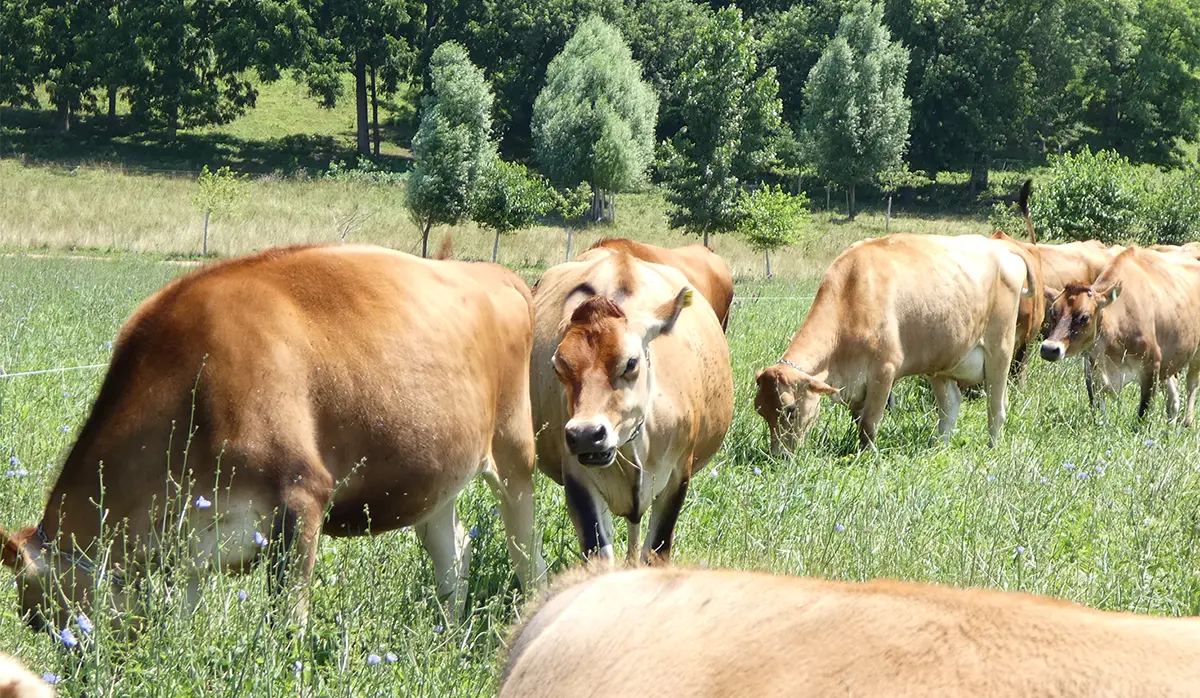
Cattle are ruminants. They are built to turn grass and forage into food, and when they are managed on pasture, they can help cycle nutrients through the farm. That is a different picture from a feedlot system built around grain, confinement, and manure concentrated in one place.
Our beef comes from cattle raised entirely on pasture, grazing diverse grasses—no grain and no feedlots. That choice reflects what we want our food to represent: care for the animal, respect for the land, and honest food raised close to nature.
A better question than “Are cattle good or bad?”
The better question is: how are the cattle being raised? How grazing cattle helps the environment comes down to management—keeping plants growing, protecting the soil, allowing recovery, and treating livestock as part of the farm’s ecology.
At Noble Pastures, we believe good food starts with healthy land. If you want to taste what pasture-based farming looks like at the table, explore our 100% grass-fed beef and other foods raised with that same commitment to real pasture, real animals, and real stewardship.